Living in Cranford, NJ: A Town Where People Actually Stay
Maria Torres · Union County Life
On a Saturday morning in Cranford, you'll see the same thing happening that's been happening for generations—neighbors stopping at local coffee shops, walking to the bank, catching up in parks. There's a permanence here that doesn't feel forced. Many families have roots going back decades, and newcomers tend to plant themselves deep.
Cranford appeals to young families betting on schools, working parents who commute to the city but want their kids in actual yards, and longtime residents who've watched the town grow steady and stable. You'll find retirees who never left, couples trading up from smaller places, and remote workers who just wanted a real neighborhood instead of a commuter belt.
This is what separates Cranford from neighbors like Westfield or Scotch Plains: it's not trying to reinvent itself. It's not chasing trends. It's a working town where the schools work, the parks are used, and people recognize each other on the street.
What Actually Makes Cranford Feel Different
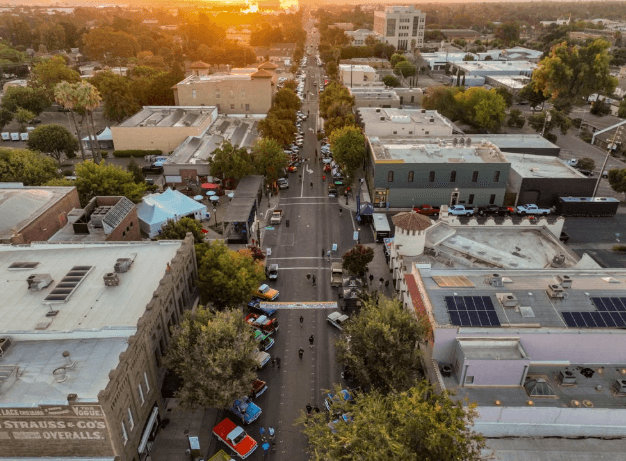
The biggest difference is downtown. Eastman Street and Park Avenue aren't cute—they're real. You've got independent coffee shops and roasters, family-owned Italian restaurants that have been there for decades (Bel Giardino, Cranford Bistro), casual spots like Ani Ramen House and Old City Café and Grill (Mediterranean), a working farmers market in season, and retailers who know their customers by name. No chain stores trying to look local. No Instagram-bait storefronts. Just a place where people eat dinner, buy groceries, and live. The downtown runs 29 restaurants during Restaurant Week (twice a year), which tells you the depth of options without the hype.
Near the station, neighborhoods are compact and walkable—smaller lots, older homes, easier access to downtown. Station Hill in particular has drawn renovators and young families who like the walkability trade-off. Move north of the commercial district into blocks like Riverside or areas near Lincoln School, and you hit the Cranford people picture in their heads: tree-canopied residential streets, larger lots, room to breathe, slower pace. Most families make that trade-off consciously—proximity for space.
The Commute Reality
Cranford Station sits on the NJ Transit Raritan Valley Line. You catch the train from downtown, and you're at Newark Penn Station in 35–45 minutes off-peak (transfer required for New York Penn Station). Rush hour adds another 10–15 minutes. It's reliable enough that families actually plan their lives around it. Drivers can hit Manhattan via I-78 in roughly 35 minutes with light traffic, but most commuters prefer the train—you read, work, decompress during the commute. It's not a 25-minute trip like some closer towns, but it's not a grind either.
Parks, Real Life, and Where Families Actually Spend Time
Cranford maintains 11 public parks. Nomahegan Park, the largest at 138 acres, is the anchor—with walking and fitness trails, sports fields (softball and soccer), playgrounds, and a scenic pond and lake for fishing and paddle boating. The park connects to the broader Rahway River Parkway system, which extends access to Lenape Park (450 acres shared with Westfield, Springfield, and Kenilworth). What matters to residents is the variety: pocket parks for quick after-school runs, Nomahegan for real weekend hikes and activities, sports facilities that don't have long waiting lists, and connected trail systems for biking and jogging. It's enough.
Who Lives Here
Families with young kids in school districts (the Cranford Public Schools rank #5 in Union County and 87th statewide with strong test scores—62% math proficiency vs. 38% statewide, 72% reading vs. 49% statewide). Couples in their 30s and 40s who've outgrown apartments or smaller homes. Retirees who raised kids here and see no reason to leave. Remote workers who realized they didn't need to be in the city. Working parents who need reliable schools and a sane commute. It's mixed income but unified by the same values: stability, community, schools that work.
Real Estate Ground Truth
Single-family homes run $450K–$750K+ depending on size, condition, and whether you're near the station or on a quiet residential block. Smaller historic homes in walkable areas: $450K–$600K. Larger updated homes on tree-lined blocks: $650K–$800K. Townhomes and condos near downtown and transit: $300K–$450K. The market moves steadily. Best competition happens on good school blocks and near walkable downtown.
Cranford isn't the flashiest place in Union County. It's the one where people stay.
Quick Facts
Train Access: NJ Transit Raritan Valley Line (RVL) to Newark Penn Station: 35–45 min off-peak, 50–60 min rush hour; transfer required to NYC Penn Station
Schools: Cranford Public Schools ranked #5 in Union County, 87th statewide out of 609 districts; 7 schools serving 3,751 students; average test scores 9/10 (top 20% of NJ schools)
Parks: 11 municipal parks; Nomahegan Park (138 acres) with trails, sports fields, pond/lake; connects to Rahway River Parkway and Lenape Park (450 acres)
Downtown: Eastman Street and Park Avenue; 29+ restaurants (Restaurant Week participants); independent coffee shops, local Italian and Mediterranean restaurants, seasonal farmers market
Home Prices: Single-family $450K–$800K; condos/townhomes $300K–$450K
Neighborhoods: Station Hill (walkable, compact); Riverside (quieter, larger lots); residential blocks north of downtown (tree-lined, family-focused)
Who Moves Here: Families prioritizing schools, NYC commuters seeking suburban life, longtime residents, empty nesters staying put
FAQ
Q: Is Cranford actually walkable, or is that just marketing? A: Downtown is genuinely walkable—you can walk to coffee, groceries, restaurants, the station. Beyond downtown, it's car-dependent. Station Hill area and blocks immediately around downtown offer the most walkability. If you're in the quiet residential neighborhoods, you're driving to most errands, and that's intentional.
Q: How competitive are good schools, and does it matter for resale? A: The Cranford Public Schools system is the #1 draw, ranked #5 in Union County and 87th statewide with strong proficiency scores well above state averages. Homes in good school zones move faster and hold value better than elsewhere in Union County. If schools matter to you, they'll matter to your next buyer too. School quality directly impacts demand and pricing.
Q: What's the dining scene actually like? A: Not fancy, but solid and surprisingly diverse. You've got family-owned Italian restaurants like Bel Giardino and Cranford Bistro, Mediterranean spots like Old City Café and Grill, Asian options like Ani Ramen House, and newer spots taking over old storefronts. The farmers market runs seasonally downtown. Downtown participates in Restaurant Week twice a year with 29+ restaurants offering special prix fixe menus. You won't find destination restaurants requiring reservations months in advance, but you'll find places where your neighbors eat regularly and where owners remember regular customers.
Q: Is the commute to Manhattan worth it? A: If you're okay with 45–60 minutes, yes. Train via Newark Penn Station is reliable and allows you to work or decompress (transfer required to reach NYC Penn Station). Driving is faster off-peak but slower in rush hour. Most families who move here accept the commute as the trade-off for suburban schools and space. It's not short, but it's manageable and predictable.
Q: What's Cranford like compared to neighboring towns? A: Compared to Westfield, Cranford feels less polished and more lived-in. Compared to Elizabeth, it's much quieter and more family-focused. Unlike some Union County towns chasing development, Cranford is content being steady. Prices are solid but not the highest in the county. It appeals to people who value substance over image.
Q: Are there neighborhoods to avoid? A: Flood maps matter—check them before buying anywhere in Cranford. Some areas near waterways have higher flood risk and insurance costs. A local agent can walk you through which streets are safer. Beyond that, most neighborhoods are solid. The trade-off is usually proximity versus space, not safety or quality of life.
Q: How are the parks really used by families? A: Nomahegan Park is the hub—you'll see joggers, cyclists, and families regularly on the trails. The 138-acre size means there's room for groups without feeling crowded. Softball and soccer fields stay busy in season. The pond and lake attract fishing and paddle boating. Connection to the Rahway River Parkway extends options for longer hikes and biking trips. Residents genuinely use the parks, not just photograph them.
What Really Matters
Cranford works because nobody's pretending. The downtown isn't trying to be something it's not. The neighborhoods are genuine. The schools deliver consistently strong results. People stay here because the basics are solid—reliable commute, good schools, accessible parks, real community—and that stability is something you can actually feel when you walk around on a Saturday morning.
If you want trending or flashy, look elsewhere. If you want a real neighborhood where families take root, know their neighbors, and build long-term lives, Cranford is worth serious consideration.
Explore Cranford businesses, events, and real estate on Union County Life.
Related articles
 CommunityGoogle Alerts — Linden NJ
Phillips 66 Locks Out Nearly 400 Workers at Linden Refinery
Phillips 66 locked out nearly 400 Teamsters Local 877 workers at its Bayway Refinery and Linden Terminal after a contract extension expired Oct. 19 at 4 p.m.
 Community
Cranford Day 2026 Community Center Event
Cranford Day 2026 is Sunday, Nov. 1, noon to 4 p.m. at the Community Center on Walnut Avenue, a free showcase of Cranford organizations marking 250 years.
 CommunityGoogle Alerts — New Providence NJ
Pioneer Day Takes Over Springfield Avenue in New Providence
Pioneer Day, New Providence’s upgraded street fair, takes place Sunday, Oct. 25, 11 a.m. to 4 p.m. on Springfield Avenue with rides, food, and live music.
Get Union County news in your inbox
Subscribe for local headlines, town updates, and community stories from across Union County.
Sign up for the newsletter